Understanding the IRS's "Seriously Delinquent Taxpayer" Status and Its Implications


At McCauley Law Offices, P.C., we specialize in helping individuals navigate complex tax issues with the IRS. One increasingly common problem we encounter is the designation of a taxpayer as “seriously delinquent.” This status can have far-reaching consequences, including restrictions on international travel. In this post, we’ll break down what this means, how it happens, and why reaching out to our firm could be your best next step.
What Is a “Seriously Delinquent Taxpayer”?
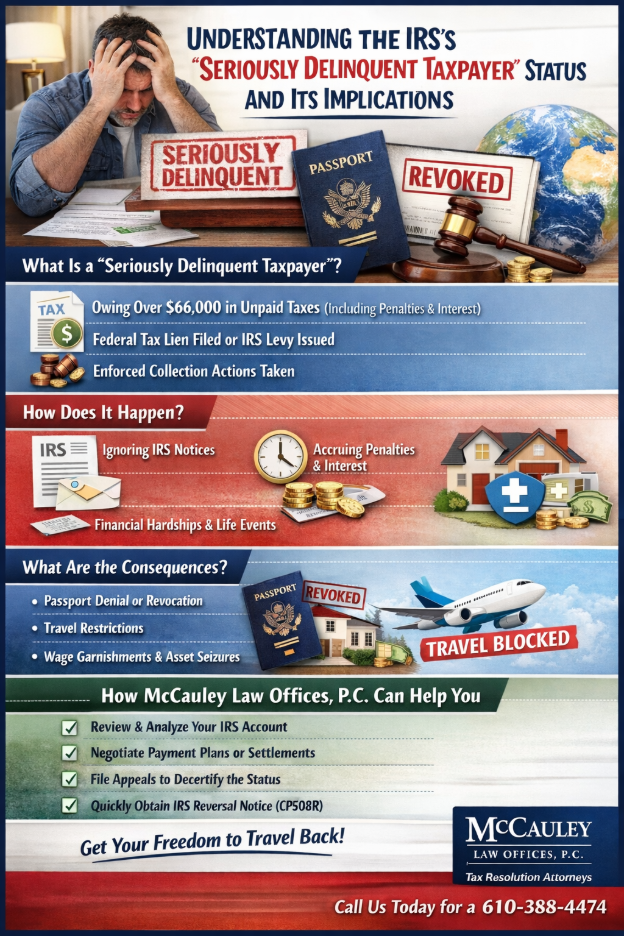
The IRS labels a taxpayer as seriously delinquent when they have an unpaid, legally enforceable federal tax debt exceeding $66,000 (including penalties and interest, adjusted annually for inflation). This threshold applies to various types of debts, such as individual income taxes, trust fund recovery penalties, business taxes where the individual is personally liable, and certain civil penalties.
It’s not just about owing money—the debt must meet specific criteria: the IRS has either filed a Notice of Federal Tax Lien (with all administrative remedies exhausted) or issued a levy on the taxpayer’s assets. Once certified, the taxpayer may face consequences far beyond the debt itself.
How Do Taxpayers End Up in This Situation?
This status typically arises from prolonged non-payment of taxes. It starts with unpaid tax assessments that accrue interest and penalties over time. If the debt grows beyond the threshold and the IRS takes enforcement actions like liens or levies without resolution, certification occurs.
Common scenarios include ignoring IRS notices, failing to file returns, or not addressing audits promptly. Life events like job loss, medical issues, or business downturns can exacerbate the problem, leading to escalating debts. Even well-intentioned taxpayers can find themselves in this situation due to complexity of tax law or miscommunication with the IRS.
What Does This Status Mean for You?
Being certified as seriously delinquent triggers the IRS to notify the U.S. Department of State under Internal Revenue Code Section 7345. This can result in:
- Denial of passport issuance or renewal.
- Potential revocation of an existing passport.
- Limitations on international travel, which can disrupt personal plans, business opportunities, or family obligations.
- Increased risk of further IRS actions like wage garnishments, bank levies, or property seizures.
It’s more than a travel inconvenience—it’s a signal that serious financial and legal issues need attention.
Why Contact McCauley Law Offices, P.C.?
If you’re facing this status, don’t wait— it won’t resolve itself. Our experienced tax attorneys can help you decertify and regain control. We start by reviewing your IRS account to confirm the debt details and identify any errors or exceptions (e.g., if you’re in an installment agreement or pursuing innocent spouse relief). Then, we negotiate resolutions such as:
- Payment plans
- Offers in compromise
- Appeals to reverse the certification
In many cases, we can get the IRS to issue a reversal notice (CP508R) within 30 days of resolution, allowing the State Department to process your passport.
Contact us today for a consultation. At McCauley Law Offices, P.C., we’re committed to protecting your rights and restoring your freedom to travel.

About the Author
Gregory McCauley Jr., Esq.
Tax Attorney · Villanova University School of Law · Admitted in Delaware, New Jersey, United States Tax Court
Gregory McCauley Jr. is an experienced tax attorney who has personally represented more than 1,000 clients in matters ranging from civil tax controversy and IRS examinations to criminal tax defense, U.S. Tax Court litigation, and complex business disputes. His practice is built on a foundation his c...